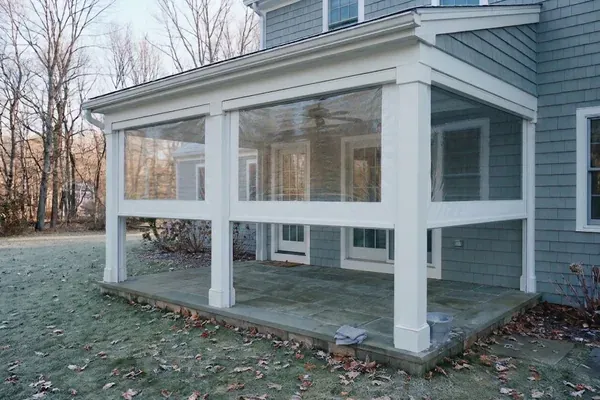
Before the First Freeze: How to Get Patio Screens Ready for a Northeast Winter
Clean, dry, protect and confirm. Fenetex®'s owner's guide says to wash screens and tracks with a soft brush and mild detergent, let them dry completely before raising them, keep water out of the housing and off the reel, and skip the pressure washer. Clear vinyl should be cleaned and polished every six months with a clear vinyl cleaner such as IMAR 313. Lubricate tracks only with a Teflon-based dry lubricant, never silicone or oil, and have your installer inspect, adjust and lubricate the tracks once a year. Then ask your installer one question before the first hard freeze: what's the cold-weather rule for your system? Manufacturers disagree on how cold is too cold to raise or lower clear vinyl, with published guidance ranging from freezing to 60°F, and Fenetex®'s owner's guide doesn't state a minimum. Whatever the answer, never force a screen that's iced or snow-covered, and never roll one up wet.
The first freeze is a deadline most people miss without noticing. One morning the windshield is white, the hose is stiff, and the patio screens that worked perfectly in October are about to spend the coldest months of the year in conditions nobody planned for.
Around New York City, that morning usually comes in November. The 1991–2020 averages put the first frost on November 4 in Bridgeport, November 8 in Newark, November 17 at JFK Airport and November 20 in Central Park. Farther inland and farther north it has already come: Caribou, Maine and Concord, New Hampshire average their first frost in late September. If you're past it, this post still applies. The hard cold is still ahead.
This is the final post in The Cold-Season Patio. The series started with what ends the patio season, then covered clear screens and safe heat, storm season and holiday hosting. This one is about the screens themselves: what to do now so they come through the winter working and look good in spring.
Why cold is hard on screens, and on clear vinyl most of all
Motorized screens are built for weather. Cold still changes how they behave, and clear vinyl changes the most.
Vinyl stiffens as it gets colder. Manufacturers across the industry say so: one describes clear vinyl as becoming more rigid in cold weather and calls that normal; another notes it will stiffen and won't roll as easily in the cold. Vinyl also shrinks in the cold. One dealer's care guide puts temporary cold-weather shrinkage at up to 1.4 percent, returning to size when the vinyl warms.
None of that is a defect. It's how the material behaves, and the same panel that feels stiff on a 30-degree morning will relax again on a warm afternoon. The point is to work with it instead of against it.
A stiff, slightly shrunken sheet of vinyl rolling onto a reel is a different thing from the soft, relaxed panel you lowered in September. That's why cold-weather operating rules exist at all, and why the next section matters.
The honest answer on cold-weather operation: it depends on your system
Here is something most screen companies don't tell you: the industry doesn't agree on how cold is too cold to raise or lower clear vinyl. We looked at published care guides from several manufacturers and dealers, and the guidance varies widely.
That's a spread from 32°F to 60°F, and some of the guides disagree on whether vinyl should spend the winter rolled up or rolled down. Fenetex®'s owner's guide, which covers One-Track™, doesn't set a cold-weather operating temperature at all.
So we won't invent one. The right answer for your system comes from your installer, who knows the vinyl, the motor and how your screens were set up. Ask before the first hard freeze: What's the cold-weather rule for my screens, and should they spend the deep winter up or down? Write the answer on the inside of the cabinet where the remote lives.
When the industry disagrees, the answer for your patio comes from the person who installed it.
What a winter does to a screen nobody looked after
It helps to picture the alternative. A screen that goes into winter dirty, damp or forced doesn't fail all at once. It wears in small ways that show up in spring.
Grit becomes scratches. The leaves, dust and pollen of a Northeast fall end up in the tracks and on the vinyl. One manufacturer warns that grit and particles will scratch clear vinyl and cloud it. A winter of panels moving over dirt is a winter of fine scratches.
Moisture becomes clouding. Fenetex®'s guide says not to roll screens up wet, and other care guides explain why: vinyl rolled up with trapped moisture can cloud. In a season of cold, damp evenings, that's easy to do by accident if nobody's thinking about it.
Force becomes wear. A screen frozen in place and pushed anyway puts strain on the parts that move it. The obstacle detection built into Fenetex® screens is there to stop the motor when something's wrong. It's a reason to listen to the screen, not a challenge to overcome.
None of this is dramatic. All of it is avoidable with one afternoon in November and a few habits through the winter.
The pre-freeze checklist
Everything in this checklist comes from Fenetex®'s owner's guide unless noted. It's an afternoon's work.
A word on cleaning products
The wrong product can do more damage than a season of dirt. Fenetex®'s guide names a clear vinyl cleaner/polish and a Teflon-based dry lubricant for a reason. Other manufacturers warn against household glass cleaners and some popular polishes because they can haze or discolor vinyl. When in doubt, stick to mild soap and water, a soft cloth and the products your installer names.
Snow, ice and frozen screens
Sooner or later, a Northeast winter will leave ice on a screen, snow in a track or a bottom bar frozen to the ground. The rule is simple: don't force it.
Several manufacturers and dealers say not to operate screens that are covered in snow or ice, and to wait for a frozen bottom bar to thaw rather than forcing it. Fenetex®'s screens have obstacle detection, and its guide notes that if a screen stops because of wind or an obstacle, the motor stops turning. If a screen won't move on a frozen morning, that's the system protecting itself. Leave it until the ice melts.
Prevention helps. Keep tracks clear of leaves and debris before the snow comes, and clear snow away from the base of the openings after a storm, gently, without chipping at ice around the screen or track.
Insect and shade screens over the winter
Most insect and shade screens spend the winter retracted in their housings, which protects them from sun and weather when they're not in use. The same rules apply: clean and dry before they go up for the season, and keep them retracted during storms, as the third post in this series covers.
If you lower one on a bright winter day for glare, check the forecast first, and raise it only once it's dry.
Give them the same pre-freeze cleaning as the clear panels, minus the polish. Mesh holds onto pollen and dust the way vinyl holds onto grit, and a clean screen that goes into its housing dry is a screen that comes out in May ready for the first mosquito. While you're at it, check the bottom bar and the track ends for anything a summer of use left behind.
A five-minute winter routine
The big job happens once. These small habits carry it through to spring.
After every use: look before you raise. If the panels are wet from rain, dew or condensation, leave them down until they dry. Fenetex®'s guide is clear that screens shouldn't be rolled up wet.
After every storm: walk the patio. Clear leaves and debris from the tracks and the floor beneath the openings before you lower anything, and clear snow from the base of each opening gently.
Once a month: run each screen through a full cycle on a mild, dry day, if your installer's cold-weather rule allows it, and watch it the whole way. You're looking for anything new: a catch, a wrinkle that won't settle, a sound you haven't heard before.
Whenever something changes: call your installer. A small adjustment in January is easier than a repair in April.
The rest of the patio
While you're out there, do the rest of the cold-weather prep in the same afternoon. It's easier to do it all at once than to come back to the patio on a colder day.
Heat. Check your heater against its manual before the cold settles in, and if you burn any fuel, test the carbon monoxide alarm on the patio. The second post in this series covers heater safety in detail.
Furniture and cushions. Bring in what won't be used, and store cushions indoors so they're dry and warm when you want them.
Lights and power. Test outdoor outlets and any GFI before you need them for a heater or string lights.
The remote. Put fresh batteries in it and give it a permanent home, next to that note about the cold-weather rule.
Questions to ask your installer before the freeze
One call covers most of what you need to know. These are the questions we'd ask.
What's the cold-weather rule for my clear screens? At what temperature should I stop raising and lowering them?
Should they spend the deep winter up or down? Guidance differs across the industry, so get the answer for your system.
When were my tracks last inspected and lubricated? If it's been more than a year, book the annual visit Fenetex® recommends.
Which cleaner and polish should I use on my vinyl? Fenetex®'s guide names IMAR 313 as an example of a clear vinyl cleaner/polish; your installer can confirm what suits your panels.
What should I do if a screen freezes in place? Know the answer before the first icy morning.
And when spring comes
The care cycle has two halves. Fenetex® recommends cleaning and polishing clear vinyl every six months, which fits neatly into a fall session before the freeze and a spring session once it's warm.
When the weather turns, choose a mild, dry day for the first full run of each screen. Several care guides note that warmth relaxes vinyl and helps the creases and ripples of a cold season soften. Then do the spring version of this checklist: wash, dry, polish and look for anything the winter left behind.
What this post won't tell you
We won't tell you a minimum operating temperature for One-Track™ clear screens, because Fenetex®'s owner's guide doesn't state one and we won't make one up. We've shown you the range other companies publish so you can see why the question matters, and pointed you to the person who can answer it for your system.
We also can't tell you how your screens will look after a particular winter. What we can say is that clean, dry, properly lubricated screens that aren't forced in the cold have the best chance of coming through it in good shape.
Frequently asked questions
How do I clean motorized patio screens before winter?
Fenetex®'s owner's guide says to wash screens and tracks with a soft brush and mild detergent, rinse, and let them dry completely before raising them. Don't spray water into the housing or onto the reel, and don't use a pressure washer. Polish clear vinyl with a clear vinyl cleaner such as IMAR 313 every six months.
Can I raise or lower clear vinyl screens below freezing?
It depends on your system. Published guidance from other manufacturers and dealers ranges from not operating clear vinyl below freezing to not operating it below 60°F, and Fenetex®'s owner's guide doesn't state a minimum. Ask your installer for the cold-weather rule for your screens before the first hard freeze.
What lubricant should I use on screen tracks?
Fenetex®'s guide calls for a Teflon-based dry lubricant such as McLube Sailkote and says never to use silicone or oil-based products. It also recommends having your installer inspect, adjust and lubricate the tracks once a year.
What should I do if a screen is frozen or covered in ice?
Don't force it. Leave the screen until the ice melts. Fenetex® screens have obstacle detection, and the motor stops if a screen is stopped by an obstacle. Keep tracks clear of debris before snow arrives, and clear snow gently from the base of openings after storms.
When is the first frost near New York City?
Based on 1991–2020 data, the average first frost is November 4 in Bridgeport, November 8 in Newark, November 17 at JFK Airport and November 20 in Central Park. Northern New England averages its first frost in late September.
Where to start, and where the series ends
Pick a dry afternoon before the next hard cold and work through the checklist. Then make one phone call to your installer with two requests: book the annual inspection, and get your system's cold-weather rule in writing.
That's the end of The Cold-Season Patio. Over five posts, the argument has been the same: a Northeast patio doesn't have to close in October. Find out what really ends your season, close the right sides, heat the space safely, respect the storms, host around the light, and look after the screens that make it all work. You can find every post in the series on One-Track News.
About the author. Kip Hudakoz is a contributing editor at One-Track News. He is a two-decade outdoor service veteran, a former United States Marine, a Rollins College graduate and co-host of the Florida Home and Garden Radio show.
Sources
Fenetex. Owner’s Guide: Retractable Screens. Current. fenetex.com
New York Botanical Garden. When should I expect the first fall frost in the New York City area?. 1991–2020 data. libanswers.nybg.org
Northeast Regional Climate Center, Cornell University. First Frost Fast Approaching. October 8, 2019. nrcc.cornell.edu
Care and cold-weather operating guidance published by other screen manufacturers and dealers (two manufacturers, three dealers and one clear-vinyl curtain maker). Undated.