The Weekend-Before Checklist for Your Patio Screens (Plus a Grill Safety Number Worth Knowing)
The Weekend-Before Checklist for Your Patio Screens (Plus a Grill Safety Number Worth Knowing)
About one in four grill-related home structure fires start on an exterior area — a porch, balcony, or patio — according to National Fire Protection Association (NFPA) data. That's directly relevant to anyone hosting a Labor Day cookout under a covered patio with motorized screens installed: where the grill sits relative to the structure matters as much as anything else on this checklist.
This is the third post in Labor Day Ready. The first two covered what ends a Labor Day party early and which screen fits which problem. This one is the practical, weekend-before checklist.
The screen check — three minutes, before the guests arrive
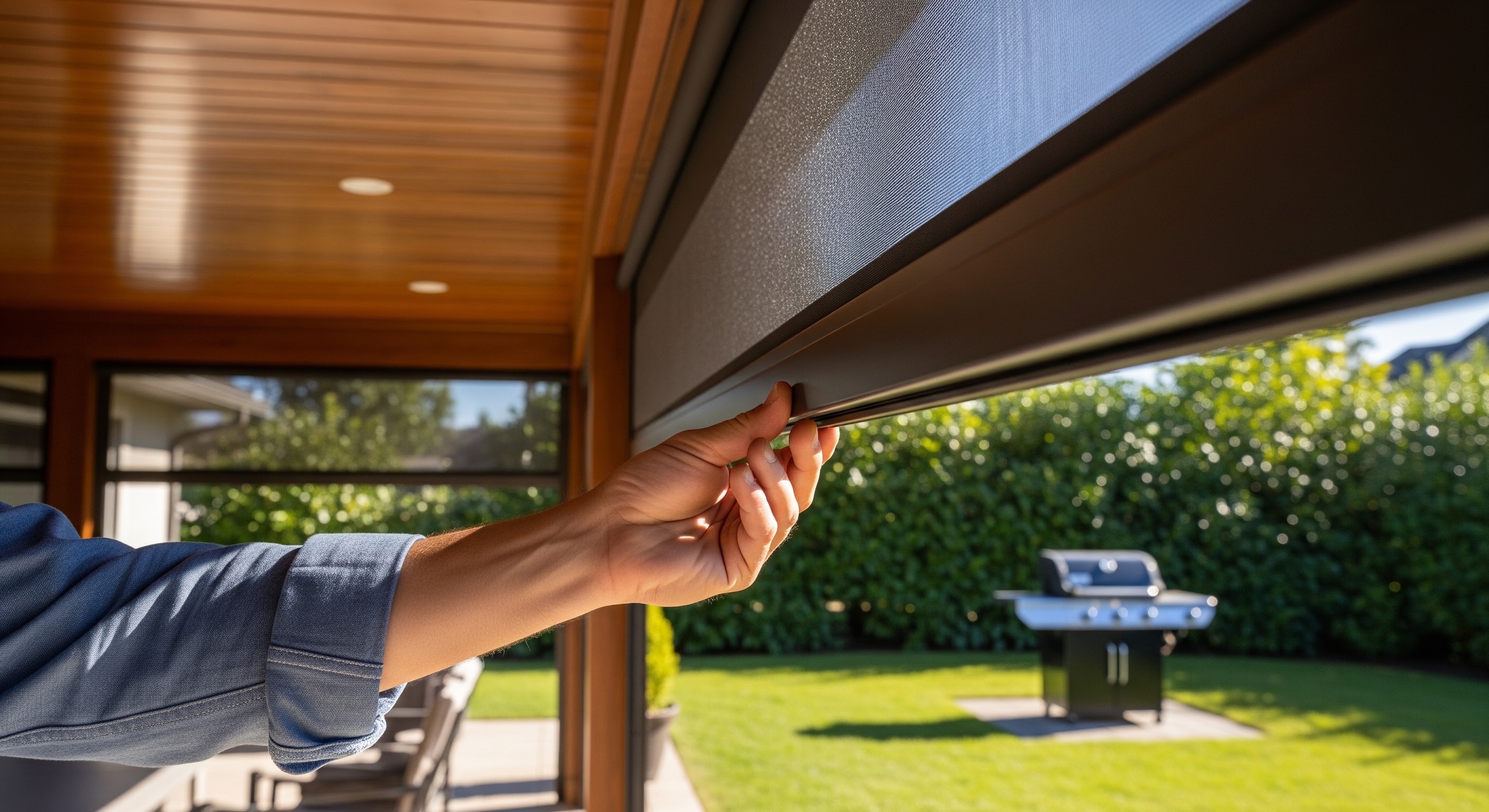
Run the screen all the way down and all the way back up once. Listen for anything that isn't a smooth, even sound. Check the bottom rail and track for leaves, dirt, or debris that built up since the last time it moved — this is the single most common reason a screen hesitates or catches. If the system uses a remote or smart-home app, confirm it responds immediately; a delayed response is worth troubleshooting before the party, not during it.
What if the screen doesn't move smoothly?
A single sticking point after debris removal, rather than a full stop, usually resolves on its own with another full cycle. A screen that doesn't move at all, or that grinds audibly, is worth a call to a certified dealer before the holiday rather than after — troubleshooting a mid-party motor issue is a worse experience for everyone than a five-minute service call the week before.
The grill safety number that actually matters for a covered patio
NFPA's most recent analysis, covering 2020 through 2024, found that U.S. fire departments responded to an annual average of roughly 12,100 home fires involving grills, hibachis, or barbecues, split almost evenly between structure fires and outdoor or unclassified fires. About one-quarter of the grill-related structure fires started on an exterior area of the home — porches, balconies, and patios specifically, per NFPA. Gas grills accounted for the large majority of these incidents.
The practical takeaway for a screened patio: the screen and its overhead track are not a substitute for the standard clearance rules — keep the grill away from the house itself, away from railings, and away from any overhang, screen enclosure included, regardless of how good the screen's fire resistance is on paper. NFPA also notes grease and fat buildup as a leading contributing factor, which is a maintenance item completely separate from the screen system but worth doing on the same day.
A three-minute screen test and a five-foot rule for the grill solve more Labor Day problems than anything else on this list.
What this post doesn't settle: NFPA's data covers all grill types and all home structures nationally — it isn't broken out specifically by covered-patio versus open-patio installations, so the exterior-origin share is a relevant proxy, not a screened-patio-specific statistic. Treat it as a reason to keep standard clearance distances, not as a claim about screen enclosures specifically.
One more check, then you're ready
Run the cycle test, clear the track, confirm the remote, and set the grill up away from the house and any overhead structure. That's the whole list. The last post in this series is a short thank-you to everyone who made this season possible — no checklist, no product, just Labor Day itself.
Sources
National Fire Protection Association, via Security Systems News. NFPA: U.S. grilling fires rise in summer months, peak in July. 2026. securitysystemsnews.com
National Fire Protection Association, via Newstalk KZRG.U.S. grilling fires peak during warmer months. 2026-05-16. newstalkkzrg.com