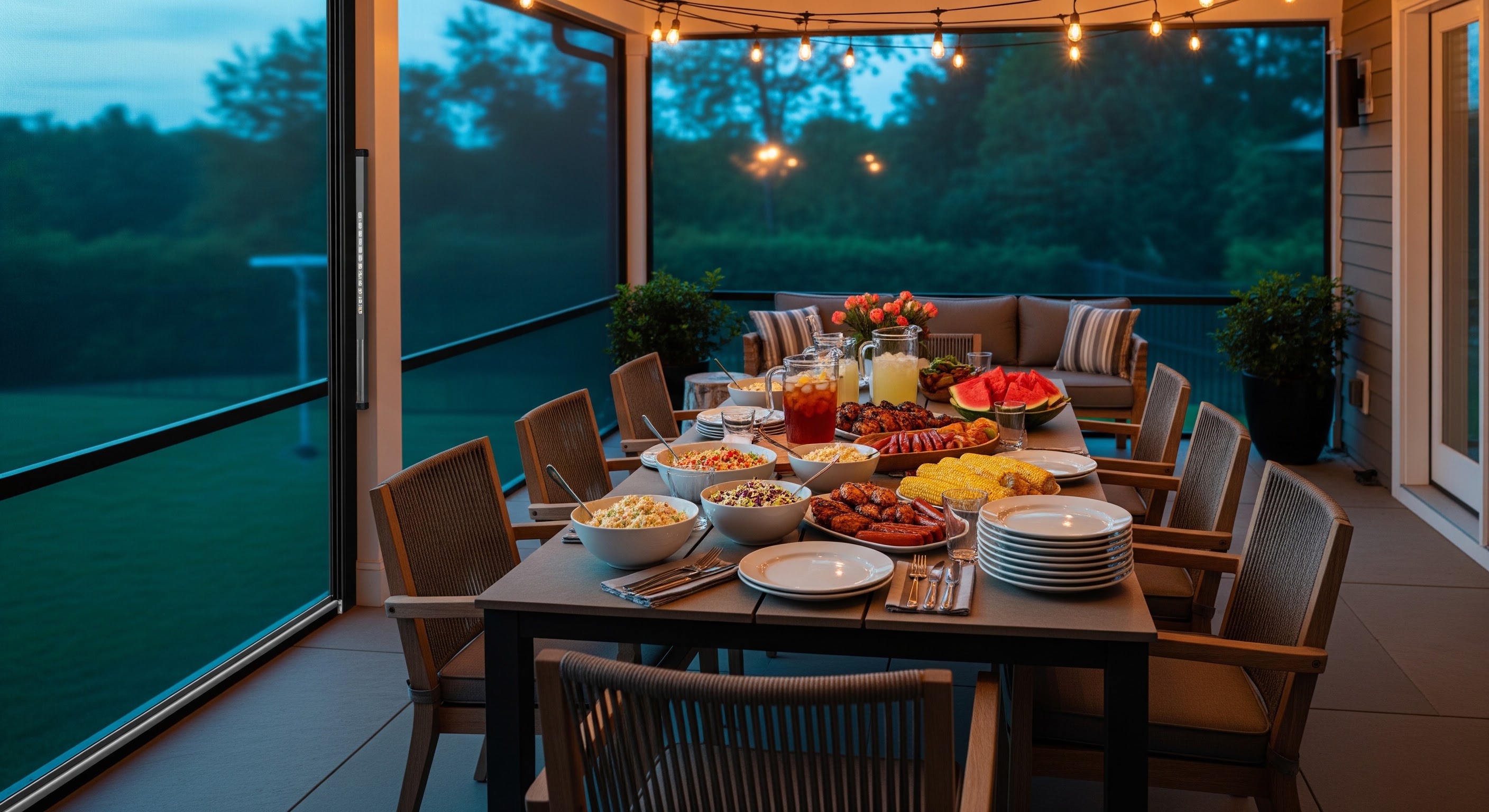
The 3 Things That End a Labor Day Party Early
The 3 Things That End a Labor Day Party Early
Almost every ruined Labor Day cookout traces back to one of three things: bugs, heat, or a burst of wind and rain nobody watched the radar for. None of them are planning failures. They're just what an open patio is exposed to, and Labor Day weekend — the last long weekend of the season in most of the country — tends to deliver at least one of them right on schedule.
This is the first post in Labor Day Ready, a short series on getting an outdoor space through the last big cookout weekend of the year.
Bugs — the uninvited guest with the worst timing
Bugs don't show up when the party starts. They show up right around dusk, which on Labor Day is usually right when dinner is being served. One bad round of mosquitoes and the conversation moves inside, the citronella candles come out, and the evening that was supposed to run late ends by 8:30. It's the single most common reason a warm-weather patio gathering gets cut short in humid, insect-heavy climates.
Heat — when the party moves inside before dessert
In hotter, drier climates, the problem isn't bugs — it's the sun still doing real work at 5 p.m. A patio that faces west, or one without real shade, can still be uncomfortably hot well into early evening in late August. Guests drift inside not because anyone said anything, but because the air conditioning is simply more comfortable than the alternative.
Wind and rain — the RSVP nobody sent
Late-summer weather turns fast in a lot of the country. A clear afternoon can produce a sudden gust or a short, hard rain by early evening — and if the patio has no way to close itself off quickly, the party moves indoors for good, even after the weather passes. This is the wildcard that shows up almost everywhere, regardless of climate.
Do I need a different type of screen depending on my climate?
Yes, and this is the part most general advice skips. Insect mesh solves the bug problem but does little for heat. A shade weave cuts sun exposure but won't fully block wind-driven rain. A clear vinyl panel keeps the view and blocks rain without turning the patio into a dark box. Matching the screen to the region's dominant problem — not buying "a screen" as a generic category — is what actually keeps the party outside.
The third thing that ends a Labor Day party isn't always the same problem — but it's always the one nobody planned for.
What this post doesn't settle: exactly how much any single screen variant reduces heat or blocks wind in measurable terms. Those are real engineering questions worth asking a certified dealer directly, and we'll get more specific about product fit in the next post in this series.
Getting ahead of it before the holiday
None of these three problems are things you can plan around with better timing alone. What actually works is closing the patio off from whichever one is likely to show up — before the first guest arrives, not after the first complaint. The next post in this series breaks down which screen type actually fits a Labor Day cookout, side by side.
Sources
One-Track News. Motorized Retractable Screen Guides & Insights. 2026-06-03. onetrackscreens.com
One-Track. Motorized Retractable Screens for Patios. Accessed 2026-08-19. onetrackscreens.com