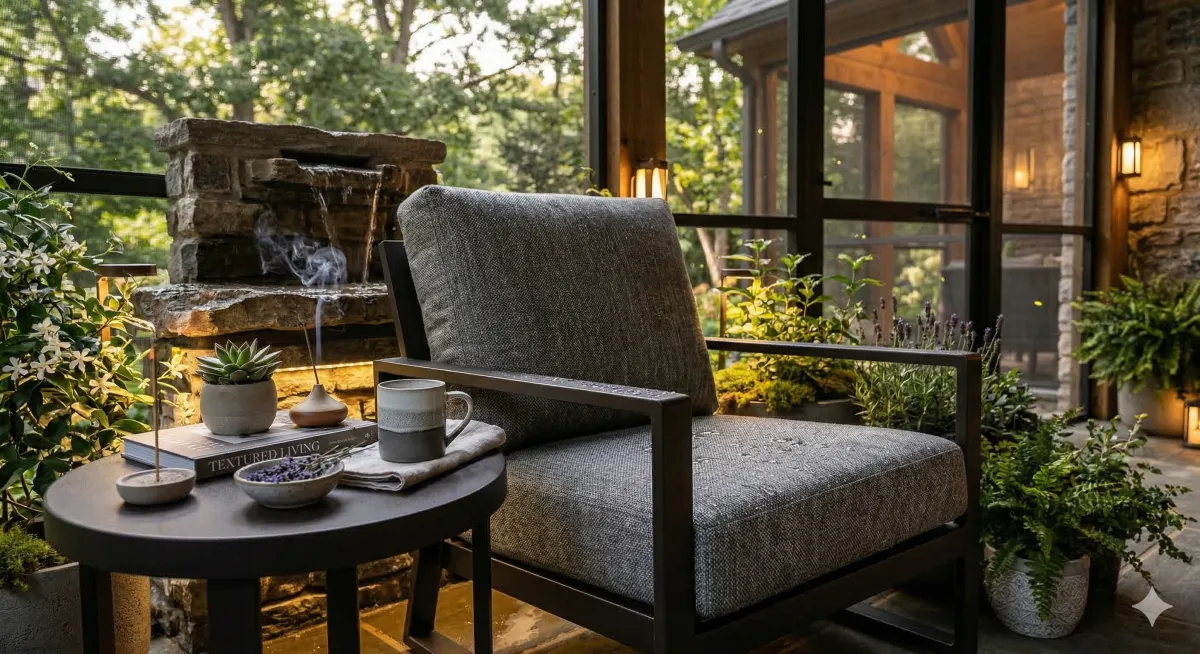
The Sensory Space: Beyond the Visual Using Greenery and Water Features to Create an Outdoor Sanctuary
Close your eyes for a moment and imagine your perfect outdoor evening. You probably didn't start with a picture—you started with a feeling. The warmth of the air against your skin. The scent of jasmine drifting from somewhere just out of sight. The sound of water moving slowly over stone, so constant and rhythmic that it erases the noise of the neighborhood before you even notice it's gone. This is the sensory space, and it is the dimension of outdoor living that most homeowners forget to design. They build beautiful structures, install flawless screens, choose impeccable furniture, and then wonder why the space still feels like it's missing something. What it's missing is the invisible architecture—the greenery, the water features, the layered sensory elements that transform a well-built patio into an outdoor sanctuary. As design season spring delivers its final touches and luxury details, the homeowners who go beyond the visual are the ones who create spaces that don't just look like a retreat; they feel like one, in every sense of the word.
The sensory space philosophy is rooted in a simple truth: human beings don't experience spaces with their eyes alone. We experience them with our ears, our skin, our nose, and our sense of spatial awareness. A patio that addresses only the visual dimension—no matter how stunning—will always feel incomplete at some subconscious level. The outdoor sanctuary design that truly resonates is one that engages at least three senses simultaneously, creating an immersive environment that the brain interprets as "safe, beautiful, and worth staying in." This is the luxury outdoor living experience that separates a decorated patio from a destination, and it is the chapter of the patio design season where the final, transformative details come to life. The greenery and water features you introduce now are not decorations; they are the sensory infrastructure of your outdoor luxury living space, and they deserve the same level of intentionality you brought to every other element of the build.
The Sound of Sanctuary
Noise is the invisible enemy of outdoor relaxation. The hum of the highway a quarter mile away. The neighbor's air conditioner cycling on and off. The distant bark of a dog that seems to exist solely to punctuate your quiet moments. A well-designed sensory space uses water features to create a "sound blanket" that masks these intrusions without adding its own form of disruption. The key is selecting water features whose sound profile is continuous and unpatterned—a gentle cascade over textured stone, a sheet of water falling into a shallow basin, or a bubbling urn that produces a soft, organic murmur. These sounds don't just cover noise; they replace it with something the brain interprets as natural, calming, and deeply connected to the experience of being outdoors.
The placement of your water feature relative to your screened-in patio is a critical design season spring decision. A water feature positioned just outside the screen creates a sense of acoustic depth, as though the sound is coming from within a larger natural landscape rather than from a fixture on your patio. A feature positioned inside the screened area—a tabletop fountain, a wall-mounted cascade, or a built-in water wall—creates an intimate, enveloping sound environment that works even when the screens are raised and the ambient noise level increases. When combined with the quiet operation of a motorized screen system featuring Quiet Spring Technology, the water feature becomes the dominant auditory experience of the space, replacing the mechanical and urban sounds with a soundtrack that signals to every guest: you have arrived at the outdoor sanctuary, and the outside world can wait. The patio screen summer use experience is elevated immeasurably when the sound environment is as carefully curated as the visual one.
See more possibilities in our gallery → https://onetrackscreens.com/gallery-and-ideals
The Green Architecture
Greenery in the sensory space is not about placing a few potted plants in the corners and calling it done. It is about creating a living architecture that evolves with the seasons, provides texture and movement, offers fragrance at strategic moments, and establishes a visual rhythm that draws the eye through the space the way a well-composed photograph leads the viewer's gaze. Vertical greenery—climbing vines on a trellis adjacent to your screen system, a living wall of ferns and mosses on a feature wall, or tall ornamental grasses that sway in the breeze just beyond the screen mesh—adds a dimension of height and motion that static furnishings cannot provide. These living elements are the luxury outdoor living details that make a space feel alive, and they are essential to the outdoor sanctuary design philosophy because they connect the built environment to the natural world in a way that is visceral and immediate.
The selection of greenery for your patio design season should be guided by three principles: sensory impact, maintenance requirements, and climate resilience. Fragrant plants like jasmine, gardenia, and lavender should be positioned where prevailing breezes will carry their scent into the screened area, creating an olfactory experience that can't be replicated with candles or diffusers. Textural plants like lamb's ear, ornamental grasses, and succulents add visual interest and invite touch, contributing to the tactile dimension of the sensory space. And hardy, climate-appropriate species ensure that your green architecture survives the spring rain and summer heat without requiring the kind of intensive care that turns a relaxation space into a chore list. The outdoor sanctuary experience depends on greenery that thrives with minimal intervention, allowing you to enjoy the space rather than labor in it. When your greenery is selected with intention during the design season spring, it becomes a self-sustaining component of the outdoor luxury living environment that grows more beautiful with each passing season.
Explore our Residential Solutions → https://onetrackscreens.com/residential-solutions
Water as Design Element
Beyond sound, water features serve as powerful visual anchors in the sensory space. A well-designed water element catches and reflects light in ways that add motion and sparkle to an otherwise static environment. During the day, sunlight dancing on a water surface creates patterns of reflected light on nearby walls and ceilings—an effect that is amplified beautifully inside a screened-in patio, where the mesh diffuses the light into soft, shifting patterns. In the evening, when your strategic lighting plan is active, a water feature becomes a luminous focal point, with underwater LEDs or adjacent accent lights transforming the moving water into a living light sculpture. This interplay between water and light is one of the most compelling luxury outdoor living details available, and it ties the sensory space directly into the lighting blueprint you've already established for your design season spring vision.
The scale of your water feature should be proportional to the space, but even modest installations can have an outsized impact on the sensory experience. A single, beautifully crafted bowl fountain on a side table can transform the acoustic and visual quality of a small screened-in patio as effectively as a large-scale waterfall transforms a resort lobby. The key is selecting a feature whose design language matches the aesthetic of your outdoor space—clean, modern lines for a contemporary patio, natural stone and organic forms for a more traditional setting. The outdoor sanctuary design is about coherence, not spectacle, and a water feature that feels like it belongs in the space will contribute more to the sensory experience than one that calls attention to itself at the expense of the overall harmony. The patio design season is the time to make these selections, while you can still coordinate the water feature with the lighting, the greenery, and the screen system into a unified sensory environment.
Why One-Track is the smart choice for your home → https://onetrackscreens.com/why-one-track
The Fragrance Layer
Of all the senses, smell is the one most directly connected to memory and emotion. A single scent can transport you to a specific place and time more powerfully than any photograph or song. The sensory space leverages this by incorporating deliberate fragrance elements into the outdoor sanctuary design—not through artificial means, but through the strategic placement of living plants and natural materials that release their scent in response to warmth, moisture, and air movement. Evening-blooming plants like moonflower and night-blooming jasmine release their most intense fragrance after sunset, which means they activate precisely when you are most likely to be using your screened-in patio for entertaining or relaxation. This alignment between plant biology and human behavior is one of the luxury outdoor living details that feels magical but is actually the result of thoughtful design season spring planning.
Herbs are another extraordinarily effective fragrance tool for the sensory space. A planter of rosemary, basil, and mint positioned near the entrance to your screened area releases scent every time someone brushes past, creating an olfactory welcome that sets the tone for the entire evening. Lavender planted in a container that catches the afternoon sun will perfume the air as the heat intensifies its essential oils, and the scent will linger into the evening as the plant slowly cools. These fragrance elements do double duty—they contribute to the outdoor sanctuary experience while also providing fresh ingredients for cooking and cocktails, which adds yet another layer of sensory engagement to your patio screen summer use. The homeowners who design for fragrance during the patio design season are the ones whose spaces feel complete in a way that visitors can sense but often can't explain. It is the invisible detail that makes everything else feel more intentional, more luxurious, and more deeply connected to the natural world that your outdoor space is meant to celebrate.
Explore our Smart Home Integration → https://onetrackscreens.com/smart-home-integration
The Tactile Garden
Touch is the most intimate sense, and the sensory space invites it at every opportunity. Textured planters made from raw concrete or hand-thrown pottery. A smooth, water-worn stone placed at the edge of a water feature, positioned so that guests instinctively reach out to feel its surface. The rough bark of a potted Japanese maple contrasting with the smooth, cool aluminum of your One-Track screen frame. These tactile contrasts create a richness of experience that elevates the outdoor sanctuary design from a two-dimensional visual exercise to a three-dimensional, fully embodied experience. The luxury outdoor living space is one where you don't just look at the beauty; you feel it beneath your fingertips, against your bare feet, and in the breeze that carries the scent of lavender across your skin.
The design season spring is the moment to curate these tactile experiences with intention. Choose planters that invite touch. Select ground materials—stone, wood, composite—that feel good underfoot. Position furniture so that the textures of the cushions, the frames, and the surrounding greenery are all within reach. The sensory space is not a concept that requires a massive budget; it requires attention, curiosity, and a willingness to design for the body as well as the eye. When you combine the tactile garden with the sound of water, the fragrance of living plants, and the warm glow of your strategic lighting, you have created an outdoor sanctuary that engages every sense simultaneously—and that is the patio design season achievement that no photograph can fully capture. The outdoor luxury living experience is ultimately about how a space makes you feel, and the sensory space is the design philosophy that ensures you feel everything your investment was meant to deliver.
Customize your perfect screen here → https://onetrackscreens.com/customize-your-screen
The Sanctuary Realized
As design season spring delivers its final chapter, the sensory space is the crescendo that ties every earlier decision together. The screens protect the sanctuary from wind and insects. The lighting illuminates it after dark. The fabrics and finishes give it texture and durability. And now, the greenery, the water features, and the fragrance elements give it soul. The outdoor sanctuary design is complete not when the last contractor leaves, but when you sit in the space for the first time and realize that every sense is engaged—sight, sound, smell, touch, and that ineffable sixth sense that tells you a space was made with care. The patio screen summer use season is about to begin, and the homeowners who went beyond the visual during the design season spring are the ones who will spend the summer not just on their patio, but in their sanctuary.
The outdoor luxury living experience you imagined at the start of this journey—the one that began with a feeling, not a picture—is now within reach. The sensory space is the bridge between what you built and what you experience, and it is the detail that ensures your outdoor sanctuary doesn't just impress visitors; it transforms you every evening you spend there. The greenery will grow. The water will flow. The fragrance will shift with the seasons. And your motorized screens, lowered against the evening air, will hold it all in a space that is uniquely, sensationally yours. This is the final luxury detail of the design season spring, and it is the one that makes every other detail matter more.
Begin your Great Defrost journey today → https://onetrackscreens.com/one-track